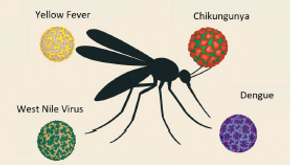
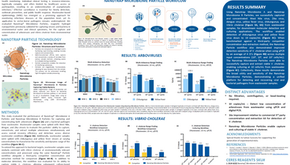
Oct 1Semi-Automated Arbovirus Detection in Wastewater with Nanotrap Microbiome Particles and the Nanotrap PRIME Extraction Kit
Sep 4A bilateral US-UK airplane wastewater monitoring pilot demonstrates the feasibility of an international wastewater surveillance network
Sep 4Comparative Evaluation of DNA Extraction Workflows for Efficient Recovery of pBI143 from Wastewater
Sep 4Integrating environmental and clinical surveillance for typhoid: insights from a prospective wastewater surveillance study in urban India
Aug 6Comparison of PMMoV RNA, crAssphage DNA and human mitochondrial DNA/RNA as normalization markers in wastewater-based epidemiology
Jun 5Utilizing TaqMan Array Card Assays for In-Depth Analysis of Wastewater Collected in Dhaka, Bangladesh
Jun 5Intact Microbe Capture and Viable Microbe Recovery from Whole Blood and Urine Using Magnetic Hydrogel Particles
May 4Detection of Arboviruses and Vibrio cholerae from Environmental Water Samples using Magnetic Hydrogel Particles for Microbe Capture and Concentration
May 4Enabling Whole-Genome Sequencing of Native Influenza A in Wastewater Using Nanotrap Microbiome Particles and NEBNext Influenza A Integrated Indexing Primers
May 4Enhanced Detection of Fecal Indicators in High Volume Surface Water using Nanotrap Microbiome Particles
Apr 6Effect of nucleic acid concentration method on Severe Acute Respiratory Syndrome Coronavirus 2 detection sensitivity in aircraft wastewater
Mar 12Capture and Detection of Mycobacterium from Sputum Samples using Nanotrap Microbiome B Particles
Feb 18Real-time Public Health Interventions Driven by Wastewater and Environmental Surveillance During Uganda’s 2025 Martyrs Day Mass Gathering
Jan 27Wastewater-based Surveillance as a Proactive Public Health Tool: Insights from SARS-CoV-2 Monitoring in Kampala, Uganda (2023–2024)
Jan 6Performance Comparison of Two MagMAX™ Extraction Kits Using the Nanotrap Microbiome Particle Workflow