top of page
Literature


Concentrating Viruses: Advancing Urine as a Matrix for Viral Discovery and Diagnostics
Urine has traditionally been overlooked in viral diagnostics, with most research focusing on respiratory and blood samples. Advances in molecular testing and metagenomic sequencing have revealed that urine contains a diverse array of viral targets, including both eukaryotic viruses and bacteriophages. Despite these findings, current diagnostic methods, such as molecular assays and culture-based techniques, remain limited by low viral titers, inhibitory matrix components, and
Mar 16


A Study on Protein Enrichment and Digestion Workflows from Multiple Biofluid Types
Mass spectrometry–based proteomic analysis is a powerful tool for biomarker discovery, but the detection of low-abundance proteins in complex biological samples such as plasma, serum, cerebrospinal fluid (CSF), and urine remains challenging due to high dynamic range and matrix-specific workflow constraints. The presence of abundant proteins, such as albumin, can mask lower-abundance analytes, limiting proteome depth and sensitivity for clinically relevant targets, including c
Mar 16


Capture and Detection of Mycobacterium from Sputum Samples using Nanotrap Microbiome B Particles
Tuberculosis (TB) remains a leading global health concern, causing approximately 1.4 million deaths annually.(1) Early and accurate detection of Mycobacterium tuberculosis in complex clinical samples, such as sputum, is critical for effective diagnosis and treatment. Traditional culture methods, while highly specific, are slow and labor-intensive. Molecular approaches such as qPCR and sequencing provide faster results but are often hindered by inefficient mycobacterial recove
Mar 12


Balancing Proteome Depth, Reproducibility, and Cost in Plasma Proteomics
INTRODUCTION Plasma proteomics is inherently challenging due to its extreme dynamic range, with a small number of highly abundant proteins dominating the sample and limiting detection of lower-abundance, biologically relevant proteins. Enrichment strategies are therefore needed to increase proteome depth without introducing excessive variability, cost, or workflow complexity. The Nanotrap® Protein Enrichment Affinity Kit (PEAK) - Discovery uses magnetic hydrogel particles to
Mar 2


Evaluating Saturation and Competitive Binding Effects in Nanotrap Microbiome Particles
Nanotrap® Microbiome Particles are an affinity-bait-based capture system with afinite binding capacity. In complex matrices such as wastewater, the binding is also dependent on the sample matrix, and recovery does not scale uniformly with increasing affinity baits on Nanotrap Particle surfaces. 1 Binding analyses with protein analytes have shown complex changes in recovery based on target accessibility and interaction dynamics with hydrogel particles, rather than simple satu
Jan 19


Detection of Arboviruses and Vibrio cholerae from Environmental Water Samples using Magnetic Hydrogel Particles for Microbe Capture and Concentration
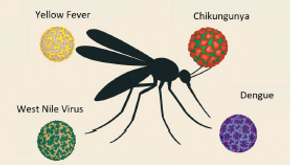
Mosquito-borne and waterborne pathogens such as arboviruses and Vibrio cholerae pose ongoing challenges for environmental and public health monitoring. Individual clinical testing is resource-intensive, logistically complex, and often limited by healthcare access or participation, resulting in an underestimation of asymptomatic infections.¹ Effective surveillance is essential for timely detection, outbreak prevention, and public health response. Wastewater-based epidemiology
Nov 17, 2025